

The delegation, composed of 50 representatives, including InvestChile, learned about the company’s extraction technology for critical minerals such as Dysprosium and Terbium, essential for the continent’s electromobility.
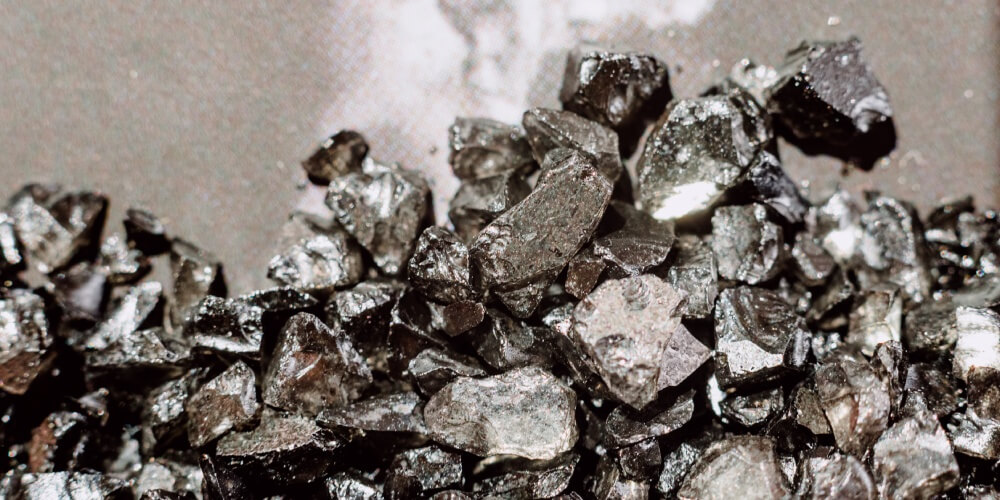
Ambassadors, diplomatic and business representatives from the European Union visited the Aclara rare earths project in Penco, Biobío Region.
The delegation of more than 50 people, which included InvestChile Mining Sector Lead Christoff Janse, learned about the Chilean initiative that could become a strategic and sustainable supplier of critical minerals for Europe’s twin green and digital transition, reported Diario Financiero.
Currently the project, which would require an investment of US$130 million, is a pioneer in Chile in the extraction of these types of minerals and is undergoing environmental assessment; but if approved, it could have a market share of critical minerals that today are mainly concentrated in China.
The delegation was led by the EU Ambassador to Chile, Claudia Gintersdorfer, who highlighted that the visit arose from the bloc’s interest in establishing partnerships with Chile within the framework of its supply security policy and under the protection of sustainable production processes, especially in heavy rare earths such as Dysprosium (Dy) and Terbium (Tb), which are found in Penco and are essential for permanent magnets used in key sectors for Europe, such as electric mobility and wind energy.
Ambassador Gintersdorfer emphasized the strategic importance of the project for European industry. «Rare earths are strategic and indispensable for the EU’s twin green and digital transition, as well as for its industrial autonomy and security.»
She stressed that the visit fulfilled the objective of bringing European companies and buyers closer to this «highly innovative» project, which fits perfectly with the EU sustainability philosophy.
Circular Technology as ESG Standard
The project that the Canadian-owned company Aclara intends to develop in Penco has piqued the interest of Europe mainly because of the innovation that would be used to extract and separate the rare earths from clays.
The model, called Circular Mineral Harvesting, sets itself apart from traditional mining, as it complies with high ESG (Environmental, Social and Governance) standards, which means there would be no blasting, milling or liquid industrial waste, and it would use 100% recycled water, which ensures that the company will not touch watercourses in the district for its production.
CEO of Aclara Resources, Ramón Barúa, described the visit as an opportunity to «become a trusted partner in the EU supply chain» and stressed that the company’s social and environmental initiative responds to the European Union’s strategic priorities for critical minerals.
The delegation also learned about technological developments made in association with the company’s strategic partners, including CAP Group, Virginia Tech, Stanford University and the German company VAC, in key stages such as separation, metallization and development of permanent magnets, positioning Aclara as an integral player in the global rare earths value chain.
Strategic partner Iris Wunderlich, Project Leader Mining & Sustainability at the Chilean-German Chamber of Commerce and Industry, commented that the Aclara project is the «most advanced and feasible» in Chile and is of great interest to German and European industry.
«Our industry is highly dependent on rare earths, obviously from the large Chinese market; in other words, China currently has the supply capacity and Europe and Germany are looking to branch out to other sources.»
Wunderlich pointed out that the sustainable format of the Chilean project is a priority for Europe, which demands high standards: «The technology and extraction method is in harmony with nature and in similar communication with the environment.» This «responsible» approach aligns with the EU vision of green transition.
In this sense, Ambassador Gintersdorfer recalled that Chile and the EU recently modernized their trade agreement, which includes a chapter on critical raw materials.
«We are interested in Chile as a country that shares our sustainability goals ... it is a country that wants to respect these standards, because in our agreement we also talk about respecting labor law, protecting biodiversity, fighting climate change.»
While visiting Biobío, the European delegation also held meetings with the Regional Governor and the Corporación Desarrolla Biobío, where they discussed other local development poles such as the green hydrogen industry, port development and sustainable wood construction, sectors where several European countries have experience.
Looking for opportunities to develop or expand a project in Chile? InvestChile accompanies investors with updated market and regulatory information, support in the analysis of project location, public-private engagement and access to innovation and promotion instruments.
For more information on how we can help you, visit www.investchile.gob.cl or contact us here.

%2017.11.51.png)