

The Finnish firm has a portfolio of nearly 2 GW of renewable energy and storage projects, ready for construction.
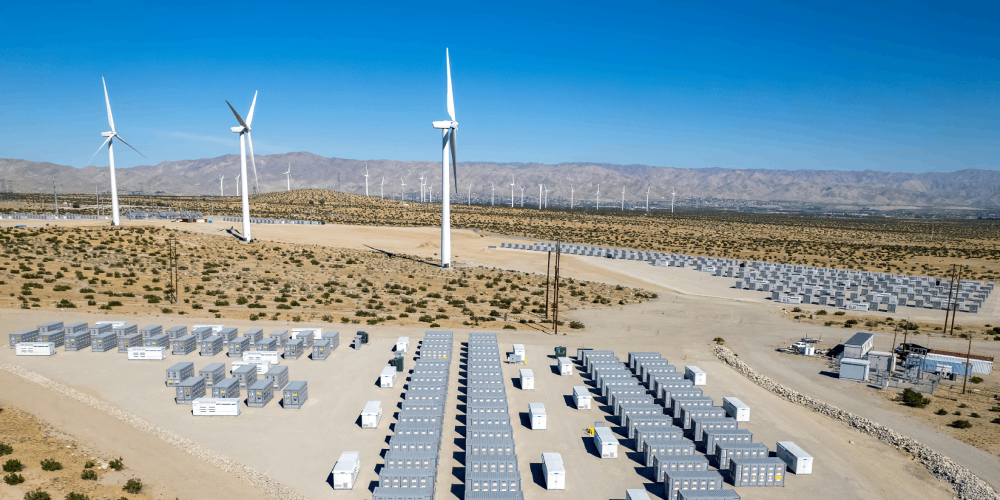
Finnish investor Korkia is making a major commitment to Chile. The firm has a portfolio of nearly 2 GW of renewable energy and storage projects, ready to build or nearing that stage, which will trigger approximately US$1.3 billion in investment.
Of this portfolio of eight projects, approximately 700 MW are for generation and 1.3 GW for storage, either standalone or co-located with generation assets.
Korkia operates in Chile through two development companies: Korkia Solar Ray and Korkia Ciudad Luz. It develops projects from initial stages through to construction or commercial operation, focusing on large-scale grid-connected solar and battery initiatives, particularly in the country’s central region.
One of its projects, for example, is the Paicaví BESS (battery energy storage system), which has already received approval from the Metropolitan Region’s Environmental Assessment Commission for its Environmental Impact Statement (EIS), with an estimated investment of US$90 million.
The Finnish company, which operates in Europe and the Americas, has been active in Chile since 2017. It entered the market during the early stages of the solar rollout and has since expanded into large-scale generation and battery storage systems. Worldwide, the firm has 14 GW of assets ready for construction now or within the next 12 to 18 months. Chile accounts for approximately 15% of its global portfolio.
Business Outlook
During a visit to Chile, Korkia’s executive vice president, Mikko Kantero, told Diario Financiero that the country has been a key market for investment and learning. As he explained, electricity demand is expected to continue growing significantly alongside the Chilean economy. “The data center industry is a major energy consumer, and Chile is a global hub due to its strategic location,” he noted.
Regarding his expectations for the new administration, he acknowledged that Chile’s regulatory framework has historically been transparent and predictable. However, he cautioned: “Electricity demand in Chile will grow very rapidly, and demand for data centers alone will grow much faster than in previous years. We fear that the current regulatory system may not be able to keep pace with demand because the permitting cycles are too long.”
“If the energy infrastructure fails to keep pace with digital growth, the entire economy will pay the price,” warned Mr. Kantero. He concluded: “Streamlining permits—without compromising environmental standards—is one of the most effective ways a government can support investment, affordability and long-term resilience.”
The debate over permitting in Chile led to the passage of a sector-specific permitting law; a reform of the Environmental Impact Assessment System remains pending. While Mr. Kantero acknowledged efforts to improve the system, he observed, “It’s a good start, but it’s not enough.”
In his view, there is still limited predictability and significant differences in authorities’ decisions across regions. Despite this, he held that Chile remains attractive because “its fundamentals are sound.”
Mr. Kantero dismissed the idea that the turbulent international context would affect plans in Chile. In a world marked by geopolitical uncertainty, he said, energy self-sufficiency is taking on renewed importance. He asserted that, as countries accelerate their digital transformation, “electricity has become more than just an industrial input: it is a strategic pillar of national sovereignty.”
For example, he noted that in Finland, critical information regarding citizens and the voting system is digital. While it used to be controlled by U.S. service providers, the government has now decided that all such information must remain within the country.
He remarked, “We see Chile as a country with great potential. That’s why we are here. We want to continue investing and doing even more.”
Source: Diario Financiero.
%2017.11.51.png)