
Although better known for copper, Chile is the world’s 21st largest producer of gold, representing 1.2% of global output. Its production of the metal has grown 20% since 2021, positioning the country as an increasingly attractive destination for gold exploration and investment.
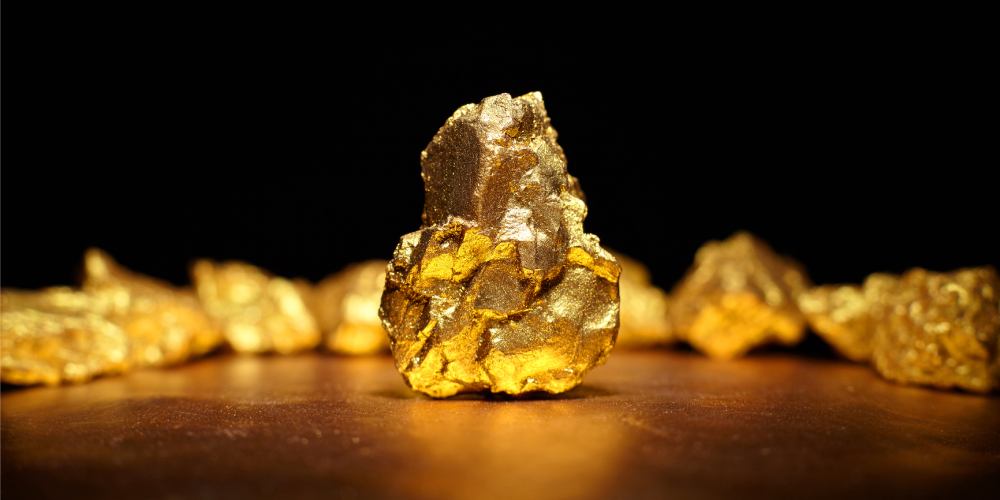
With gold prices reaching a record high amid global uncertainty, new opportunities are emerging in Chile’s fast-growing gold sector.
Now that investors have driven the price of the precious metal over $4,000 an ounce for the first time ever - an increase of 50% in 2025 -, it’s on course for its best year since the 1970s.
Analysts suggest that this rally in gold prices has been largely driven by geopolitical and economic uncertainty and shifts in the interest rate cycle.
Central banks have supported the trend by buying gold and shifting strategies away from the US dollar. The metal is attracting buyers because other traditional havens, like government bonds, have lost some of their allure.
Central banks are expected to continue cutting interest rates, thereby putting pressure on local currencies. All these conditions favor the outlook for gold in its historical role as a hedge against instability and uncertainty, meaning that market optimism levels act as a primary driver of its value and price.
What is global gold production today?
According to the US Geological Survey (USGS), the world’s unmined gold reserves amounted to 64,000 tonnes in January 2025.
The majority of them are in Australia and Russia, with each country accounting for 18.8% of the global total, followed by South Africa with 7.8%.
The remaining 54% is spread across other countries, such as Indonesia, Brazil, Peru, Canada, the US and China.
Why Chile’s gold production is rising and where new opportunities are emerging
Gold production in Chile is not as well-known as that of copper. Nevertheless, the country is the world’s 21st largest producer of the metal, accounting for 1.2% of global production.
Chile’s gold production has increased by 20% since 2021 and the industry has been advancing rapidly with several important developments in the last couple of years.
Gold Fields’ Salares Norte was the first major greenfield gold project to emerge in Chile in more than ten years. With a total investment of $1.2 billion, its implementation has generated around 4,000 direct and indirect jobs and is expected to contribute $800 million to the treasury over its lifetime. The mine is projected to produce 350,000 oz gold equivalent annually.
Another milestone for Chile’s gold industry is the development of Rio2’s Fenix project. This greenfield project is located in the Copiapó Province of the Atacama Region and is the largest undeveloped gold oxide heap leach project in the Americas.
Construction is reported to be 63% complete and its first gold production is scheduled for January 2026. The development phase of Fenix has provided employment for 1500 personnel (including contractors) and it is expected to employ 550 workers when it is operational.
Another mining company in Chile’s Atacama Region that has been increasing production is the Canadian mining company Kinross. In 2024, Kinross’s La Coipa operation produced 246,131 oz, a significant increase from the 167,870 oz it produced in 2023, making it Chile’s 4th biggest gold mine.
In March 2023, Pan American Silver acquired Yamana Gold’s assets in Chile, which included producing mines El Peñón and Minera Florida. Following its acquisition, gold production for the period March to December 2023 reached 95,700 oz at El Peñón and 72,400 oz at Minera Florida.
Several other gold exploration projects are being undertaken, including 6 projects that were included in the annual exploration catalogue published by the Ministry of Mining, the Geological Society and InvestChile to increase the visibility of exploration projects in Chile.